
Retaining Walls in Maleny
Maleny sits at roughly 450 m on the basalt-capped Blackall Range plateau, on deep red clay weathered from Tertiary lava flows and around 2,000 mm of rain a year. Historic clearing of the rainforest slopes has left them susceptible to landslip from groundwater pressure, so walls here live or die on subsurface drainage.
Maleny sits at roughly 450 metres on the basalt-capped Blackall Range plateau, on deep red clay weathered from old lava flows, and it receives around 2,000 millimetres of rain a year. On this ground, a retaining wall lives or dies on what happens behind it.
Tell us the height and length of the wall, how the block falls and what the water is doing, and we will help you get in front of a QBCC-licensed specialist.
Subsoil drainage decides a Maleny retaining wall
Deep basalt-derived clay holds water and releases it slowly. That means groundwater keeps arriving at the back of a wall for days after rain has stopped, which is a sustained loading condition rather than a short spike, and it is why walls that survive a storm on the coast can still fail on the range.
Historic clearing of the rainforest slopes has left them susceptible to landslip driven by groundwater pressure. On a Maleny block the drainage is therefore not a component of the wall, it is the design, and the wall is the part that holds the ground while the drainage does the work of keeping the pressure off it.
A system that suits this ground has an ag drain with real fall at the base, generous free-draining aggregate rather than a token gravel strip, geofabric separating that aggregate from the clay backfill, and an outlet that discharges lawfully inside the property. On sustained-flow ground, an intercepting drain upslope of the wall is often worth more than extra height or thickness in the wall itself.
The Landslide Hazard and Steep Land Overlay is a live question here. The Sunshine Coast Planning Scheme 2014 defines steep land as slopes of 15 per cent or greater, and sites within the overlay require a slope-stability assessment. On the range that is a normal part of the process rather than an exception.
Materially, core-filled besser block and concrete sleeper walls do the structural work, and battered rock walls suit the larger acreage falls where there is room and access. Timber is best kept for garden terracing well away from anything carrying real load, because sustained wet ground is the fastest way to end a treated pine wall.
What we work out first on a Maleny block
Where the groundwater goes
On deep basalt clay, subsurface flow is the loading condition. Finding it and intercepting it comes before choosing a wall.
Whether the site is inside the overlay
Steep land is defined as slopes of 15 per cent or greater, and sites in the Landslide Hazard and Steep Land Overlay require a slope-stability assessment.
Whether the wall crosses 2 metres
Above 2 metres, council approval as a concurrence agency applies in addition to building approval from a private certifier.
Tell us what is happening in Maleny and we will help you take the next step.
Why Maleny owners use our help
Drainage leads the conversation, not the material
On this plateau the material choice is the smaller decision. What happens behind the wall is what determines whether it is still straight in ten years.
The overlay is treated as normal, not exceptional
Range blocks routinely raise slope-stability questions, and expecting that from the start keeps the project moving.
Regulated work goes to licensed specialists
Structural walls are Class 10b work designed to AS 4678, and the licensed specialists in our network carry it out.
About Maleny
Maleny is the main hinterland town on the Blackall Range, looking south over the Glass House Mountains from Mary Cairncross Scenic Reserve and west from McCarthy's Lookout. The Maleny Botanic Gardens sit on the slopes outside town, and Maleny State High School and the Maleny Library serve a community spread across surrounding farmland.
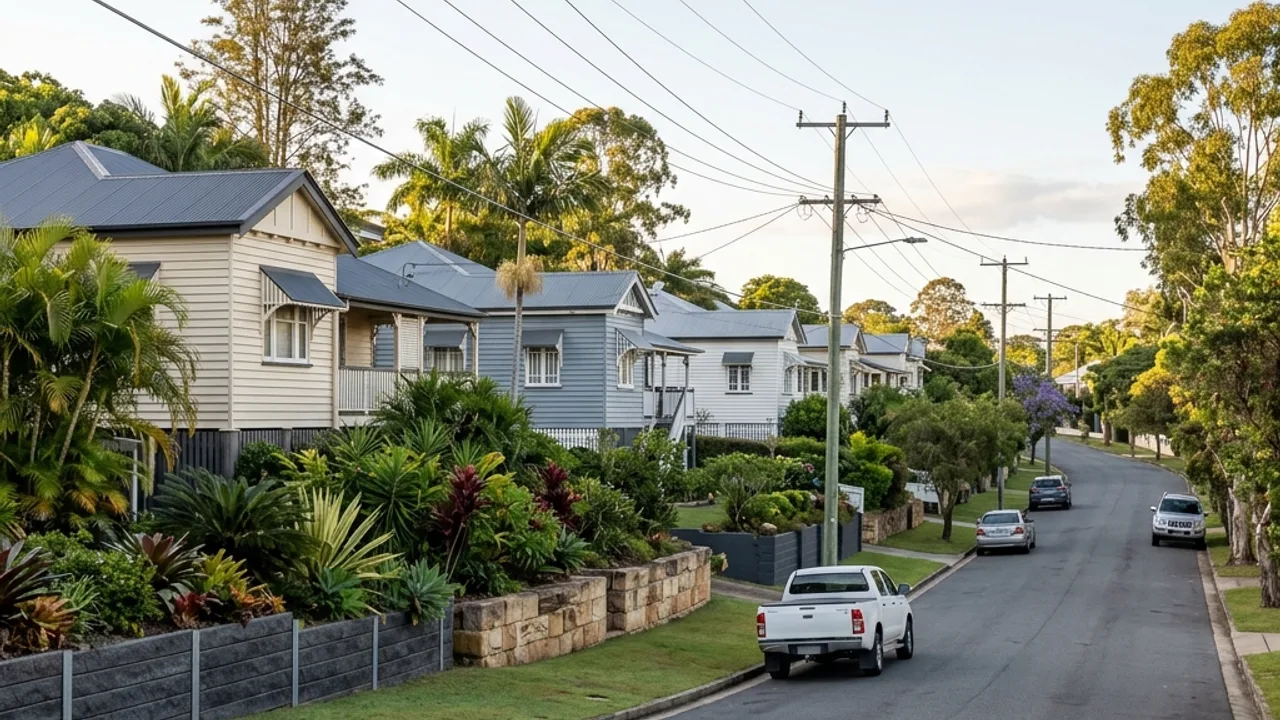
The town grid runs along Coral Street and the tree-named streets behind it, with a mix of older timber houses on the ridge, newer homes on view blocks stepping down the slopes, and dairy and small-farm acreage through Witta, Reesville and North Maleny. Blocks with a view almost always come with a fall, and a fall on this plateau almost always comes with a retaining question.
What Maleny ground does to a wall
The plateau is capped with basalt and the soil weathered from it is deep, red and heavy. It is excellent growing ground and difficult retaining ground, because it holds moisture, swells when wet, and delivers water to the back of a wall long after the surface has dried.
Around 2,000 millimetres of annual rainfall keeps that cycle running for much of the year, and the slopes below the town were cleared of rainforest generations ago, which removed the root systems that once managed some of the subsurface water. The practical result is that walls on view blocks off Bunya Street and Tamarind Street fail from behind rather than from the face: the wall itself is often sound while the ground behind it has been carrying water pressure the design never accounted for. Any Maleny quote that does not itemise the subsoil system is not a quote for a wall that will last here.
Retaining Walls services available in Maleny
Heavy basalt clay keeps loading a wall for days after rain has stopped, so drainage capacity tends to lead the material choice. Pick the closest option, or send the height and length and we will help you weigh it.
Get help with your Maleny project
Get a written quote for your Maleny retaining wall
Send the height, the length, the slope and what the water is doing on the block, and we will help you take the next step.
Nearby suburbs and localities
Maleny adjoins North Maleny, Witta, Reesville, Bald Knob. We work across those localities as well as the ones with their own page below.