
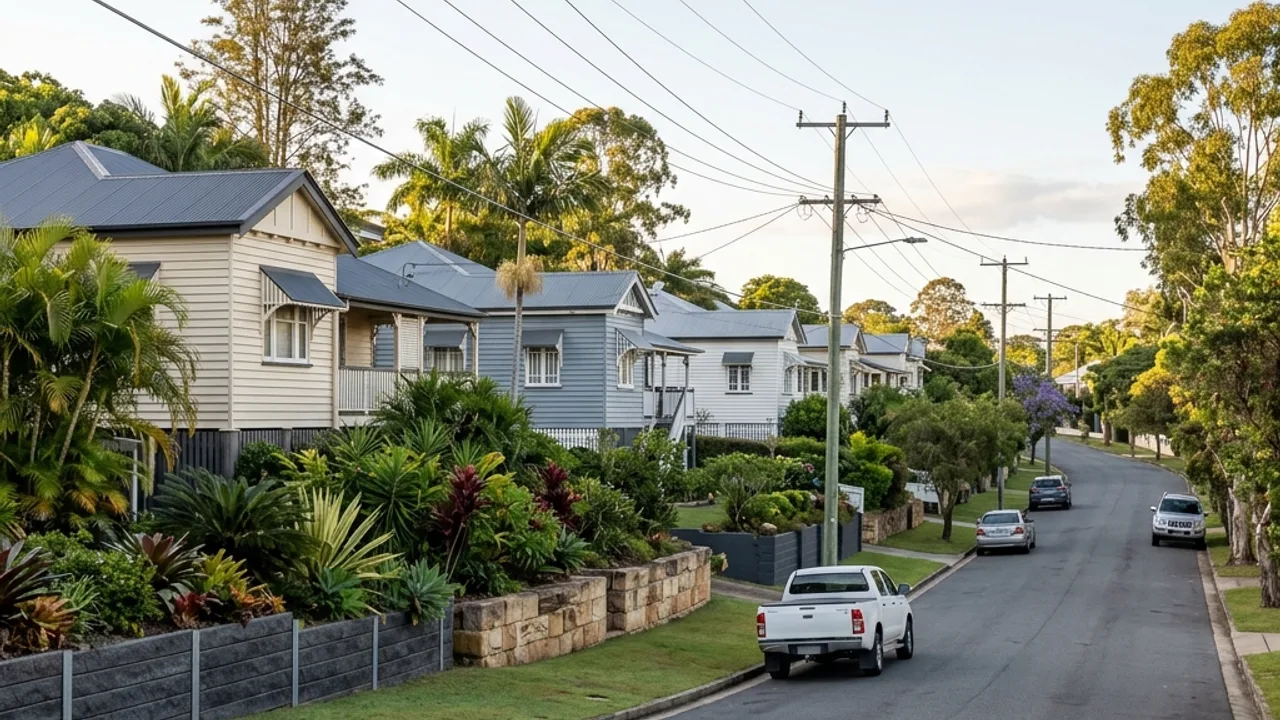
Retaining Walls in Landsborough
Landsborough sits on rolling hills at the southern foot of the Blackall Range, with Maggies Hill at 142 m, Deans Hill at 107 m and Alfs Hill at 104 m inside the locality. Weathered sandstone country gives sandy to clayey profiles over variable rock, and new estates are consistently cut into sloping ground.
Landsborough sits on rolling hills at the southern foot of the Blackall Range, with Maggies Hill at about 142 metres, Deans Hill at about 107 metres and Alfs Hill at about 104 metres inside the locality. The ground is weathered sandstone, which gives sandy to clayey profiles over variable rock.
Tell us the height and length of the wall, how the block falls and what the surface water is doing, and we will help you get in front of a QBCC-licensed specialist.
Gabion basket and rock wall options around Landsborough
Weathered sandstone gives surface soils that erode readily, so retention here often has to control scour and surface runoff as well as hold ground. That changes which materials make sense. A free-draining face lets water through rather than damming it, and on erodible ground that is frequently the more durable answer.
Gabion walls, which are wire mesh cages filled with rock, suit drainage lines, batter toes and any location where concentrated flow is cutting into a slope. Battered rock and boulder walls suit the larger blocks with room behind the face and machine access, and they read naturally against the hill country here.
Where a vertical face is needed, concrete sleepers between galvanised posts remain the practical choice, and core-filled block handles the taller structural cuts. On variable rock the excavation is the wildcard: post holes that auger easily in one section can meet rock in the next, which changes the method mid-run if it has not been anticipated.
New estate development in Landsborough is consistently cut into sloping ground, so the retaining is mostly cut-and-fill boundary work between benched pads. The approval triggers on those walls are usually surcharge and proximity rather than height, because driveways and buildings sit close behind the wall lines.
Drainage still applies in full. Free-draining ground does not remove the requirement for subsoil drainage behind a retaining wall under QDC NMP 1.7, and it does not solve the surface problem either. On erodible sandstone soils, surface grading and scour protection at outlets matter as much as the pipe in the trench.
What we work out first on a Landsborough block
Whether scour is part of the problem
On erodible sandstone soils, surface runoff can undercut a wall that is otherwise perfectly designed for earth pressure.
How variable the rock is
Depth to rock changes across short distances here, and that decides the excavation method more than the material does.
What sits behind an estate boundary wall
On benched estate lots the surcharge and proximity triggers apply more often than the height one.
Tell us what is happening in Landsborough and we will help you take the next step.
Why Landsborough owners use our help
Surface water is treated as part of the job
On this ground a wall that ignores runoff gets undercut. Scour control belongs in the scope, not in the landscaping afterthought.
Rock variability is flagged before excavation
Knowing the ground may change along the run avoids the mid-job method change that turns into a variation.
Licensed specialists carry out regulated work
The licence sits with the specialists in our network, and it follows the value of the building work rather than the wall height.
About Landsborough
Landsborough is an old rail town at the foot of the range, with the Landsborough railway station and the Landsborough Museum on the main street and Landsborough State School serving the surrounding streets. Ewen Maddock Dam sits to the south-east of the locality and Pioneer Park anchors the village centre off Cribb Street.
The building stock runs from timber cottages in the original town grid around Gympie Street North and Bella Street through post-war homes on the hills to new estate releases cut into the sloping ground on the town's edges. Small acreage runs out toward Mooloolah Valley and Bald Knob, where the falls get longer and rock walls become practical.
What Landsborough ground does to a wall
The hills here are weathered sandstone rather than basalt, and that produces surface soils that are sandy, loose and easily moved by water. It is a different failure risk to the range: instead of sustained groundwater pressure pushing a wall over, the common problem is surface flow cutting a channel and undermining the base of a wall that was never touched by earth pressure at all.
Depth to competent rock also varies noticeably over short distances across Maggies Hill and the ground rising toward Deans Hill. On the newer estate cuts off Maleny Street and Stephens Street, that variability means a wall run can need three different excavation approaches along its length, and it means a footing designed for one end may not suit the other. Assuming uniform ground is the most expensive assumption available on a Landsborough block.
Retaining Walls services available in Landsborough
Erodible weathered sandstone often favours a free-draining face over a sealed one, so surface runoff shapes the choice here. Pick the closest option, or send the details and we will help you compare them.
Get help with your Landsborough project
Get a written quote for your Landsborough retaining wall
Send the height, the length, the fall and what the surface water is doing, and we will help you take the next step.
Nearby suburbs and localities
Landsborough adjoins Beerwah, Mooloolah Valley, Bald Knob, Glenview. We work across those localities as well as the ones with their own page below.