Retaining Wall Repairs And Replacement Sunshine Coast
Cracking, leaning, bulging, rotted sleepers or ground dropping away behind the wall. Describe what you can see and we will help you work out whether you are buying a repair or a rebuild.
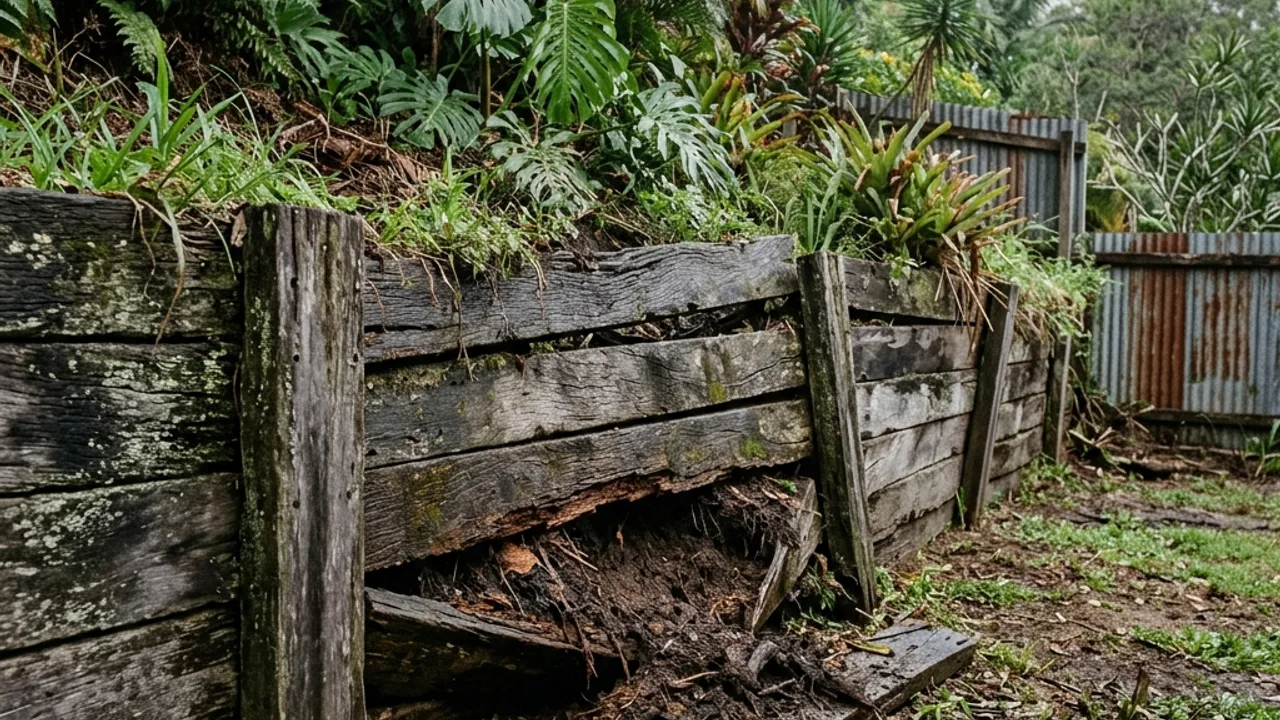
Timber sleeper failures and what you are probably seeing
Most people who need this page do not arrive with a product in mind. They arrive with a description: a few cracks in the front wall, a section that has started to lean, a post that got hit when a vehicle backed out, or soil quietly disappearing from behind the top course.
Those symptoms map to a short list of causes, and water sits behind most of them. A wall that was built without a subsoil drain, or with a drain that has since silted up, is carrying pressure it was never designed for, and it will tell you so slowly before it tells you so quickly.
Who this is for
This is the symptom-led page on the site. Everything else starts from a decision about what to build; this starts from what you can see out the window. It is also the page for the owner who is not sure which trade to ask for, having been told variously to call a bricklayer, a landscaper, a mason or someone with an excavator.
The useful first message describes four things: what you can see, roughly how long it has been like that, the height and length of the wall, and the suburb. Photos taken square on and from the side are worth more than a paragraph, because the lean and the line show up immediately in a photograph and rarely in a description.
What repair work covers
Crack and section repair
Localised damage where the rest of the wall is sound. The judgement is whether the damage is a symptom of something moving or an isolated event.
Sleeper and post replacement
Swapping out failed timber sleepers or a rotted post while keeping the rest of the wall. Practical where the failure is confined and the posts either side are sound.
Impact damage repair
A bent steel post or a broken sleeper from a vehicle. Common on driveway edges and carpark boundaries with a tight reversing line, and usually repairable if the wall was sound before the impact.
Ag drain and drainage remediation
Excavating the backfill, installing a proper ag drain in aggregate with geofabric separation, and reinstating with free-draining material. The fix that stops the same failure returning.
Re-levelling and re-setting
Where a section has settled or moved but the structure is intact, taking it back and resetting it to line and level.
Full removal and rebuild
Most often an old timber wall out and a concrete sleeper wall in. This carries demolition, disposal and access cost that a new wall on clear ground does not.
How a repair enquiry is worked through
- 1
Describe what you can see
Cracking, leaning, bulging at the base, soft or rotting timber, soil dropping behind the wall, or water escaping through or over the face. Plus how long it has been like that.
- 2
Work back to the cause
Localised or along the whole run, posts sound or gone, and whether water is involved. The answer to those three usually settles the repair-or-replace question on its own.
- 3
Settle the approval position
The council's wording covers modification and repair, not just construction, so repair work is not automatically outside the permit question. A private certifier makes that call.
- 4
Price the honest option
A repair where a repair will hold, a rebuild where it will not. If it is a rebuild, the material decision moves to the concrete sleeper or block pages and the demolition premium gets named.
Repair or replace, honestly
Usually repairable: localised cracking with no movement elsewhere, a single damaged or impacted post, one or two failed sleepers in an otherwise sound wall, a settled section on stable ground, and drainage that has failed behind a structurally intact wall.
Usually a replacement conversation: posts that have rotted at ground line, a lean that runs along the length rather than at one point, bulging at the base, and any timber wall at or past its commonly cited 10 to 15 year coastal life where the failure is general rather than local.
The cost difference is not incremental. A replacement carries demolition, disposal and often re-excavation clear of the old footings, and access constraints that a new wall on clear ground never faces. That is why a cheap repair on a wall that needed replacing usually turns into both jobs.
There is a safety line worth stating plainly. If a wall has moved suddenly, is bulging at the base, or ground is dropping away behind it, keep people and vehicles clear of it and have it looked at promptly by a licensed specialist. We cannot tell you a wall is safe or unsafe from a description or a photograph, and we will not.
Why repairs are priced differently
Repair scope varies too widely for a face-area band
Indicative only
Repairs do not price on face area, because the work is defined by what has gone wrong rather than by how big the wall is. A single post replacement and a drainage remediation along the same wall are completely different numbers.
Replacements do use the material bands, with two additions: demolition and disposal of the existing wall, and any access premium for getting machinery and spoil in and out. Ask for both as separate lines, and ask whether the price is labour only or supply and install.
Why use our team on a failing wall
Cause before quote
Quoting a repair without working out why the wall moved is how the same wall gets repaired twice. The diagnosis conversation comes first, and it is usually short.
Urgency handled with safety guidance, not a promise
We will not invent a response time. What we will do is tell you plainly when to keep clear of a wall and get a licensed specialist to it promptly.
The approval question is raised on repairs too
Because the council's wording covers repair and modification, we make sure you know the question exists rather than letting it surface after the work has started.
The three questions we get most
Can this be repaired, or does the whole thing have to go?
It comes down to whether the failure is local or general. Localised cracking, a damaged or impacted section, a bent post, or a drainage fault behind a sound wall can often be repaired. Rotted posts, a lean along the length, bulging at the base, or a wall past its design life is a replacement conversation. The tell is usually whether the movement is at one point or everywhere.
Do I need approval just to repair it?
Possibly. Sunshine Coast Regional Council's wording covers construction, modification and repair of most retaining walls, so a repair is not automatically outside the permit question. It also matters whether the work changes the height, the loading or the position of the wall. A private building certifier makes the call, and it is worth asking before work starts rather than after.
How fast can someone look at it?
We will not put a time on that, because it would not be a promise we could keep. What we can do is take a clear description and photographs and get them in front of a licensed specialist quickly. In the meantime, if the wall has moved suddenly, is bulging at the base, or ground is dropping behind it, keep people and vehicles away from it.
Two failure stories across the Sunshine Coast
On the coastal plain and the older estate blocks around Maroochydore, Mooloolaba, Caloundra, Coolum Beach and Bli Bli, the story is time and moisture. Treated pine walls put in decades ago sit in humid ground that rarely dries out, and the posts go at ground line first while the sleepers still look serviceable.
In the hinterland around Maleny, Montville, Palmwoods and Landsborough the story is water pressure. High rainfall and groundwater on sloping ground push walls that were never drained properly, and the failure shows as a lean or a bulge rather than as rot. Impact damage is the third pattern and it is not geographic at all: it turns up wherever a driveway has a tight reversing line against a wall.
Related pages
- drainage remediation - the system that stops the next wall going the same way
- concrete sleeper walls - the usual replacement when a timber wall is past saving
- timber sleeper walls - if the wall is a low garden terrace being rebuilt like for like
Retaining Wall Repairs & Replacement: questions we get asked
Can I repair my old timber retaining wall or do I need to replace it?
What are the signs a retaining wall is failing and unsafe?
What approvals do I need to replace an existing retaining wall in Queensland?
How long do timber sleeper retaining walls last on the Sunshine Coast?
What happens if I build a retaining wall without the required permit in Queensland?
Retaining Wall Repairs & Replacement across Sunshine Coast
The ground changes across the coast, and so does the right approach to retaining wall repairs & replacement. Open your suburb for the local conditions and the approval questions that come with them.
Talk to a retaining walls specialist
Tell us what you are seeing
Everything above applies to retaining wall repairs & replacement across the Sunshine Coast. Send your details and we will help you get in front of a licensed specialist.